Hi! Welcome to New Earth Colors, I'm so glad you are here!
Clothing that heals: Returning to Natural Fibers and Plant Dyes
Blog post descriptionLearn how natural fabrics and plant-based dyes may support health and well-being. This article explores the benefits of wool, linen, hemp, indigo, and eucalyptus, and how clothing can play a role in healing and holistic living. .
4/6/20262 min read
Can Your Clothing Be Healing?
What if your clothing could be more than just non-toxic, hypoallergenic, and biodegradable? What if it could actually support your health and well-being?
I believe the clothes we wear are an extension of our bodies. The fibers that touch our skin every day can influence how we feel—physically, emotionally, and energetically.
In a 2003 study, Dr. Heidi Yellen measured the vibrational frequencies of various natural and synthetic fabrics. Her findings suggest that fabrics with higher frequencies may support human vitality, emotional balance, and overall well-being, while lower-frequency materials may contribute to discomfort or even illness. According to her research, wool, linen, and hemp ranked among the highest vibrational fibers.
Interestingly, these same fibers are also some of the most sustainable and functional materials available. They are naturally breathable, antibacterial, mold-resistant, and gentle on the skin—qualities that make them ideal for everyday wear.
Wool, in particular, stands out. It is one of the most versatile and beneficial natural fibers. It regulates temperature, keeping you comfortable in both warm and cold conditions. It is naturally antimicrobial and resistant to odor, even with frequent wear. Wool is also water-repellent, stain-resistant, and flame-resistant, while still remaining breathable. Even when damp, it continues to feel warm and dry. Wearing wool often feels like a second skin—protective, adaptive, and alive.
But what happens when we take this a step further?
What if we combine the inherent benefits of natural fibers with the healing properties of plants?
Many plants traditionally used in natural dyeing are also known for their medicinal qualities. For centuries, these plants have been used not only to color textiles, but to support health and healing.
Take indigo, for example—one of the most well-known natural dyes. Beyond its deep, rich color, indigo has a long history of medicinal use, particularly in treating skin conditions. Its active compounds—indirubin, isatin, and tryptanthrin—support healthy skin function by improving cellular connections. Indigo is also known for its anti-inflammatory, antibacterial, and antifungal properties, and even offers natural insect-repelling benefits.
Historically, these properties were deeply valued. Ancient samurai wore indigo-dyed garments beneath their armor to support wound healing. Japanese firefighters also wore indigo-dyed clothing, benefiting from its natural resistance to heat and flame.
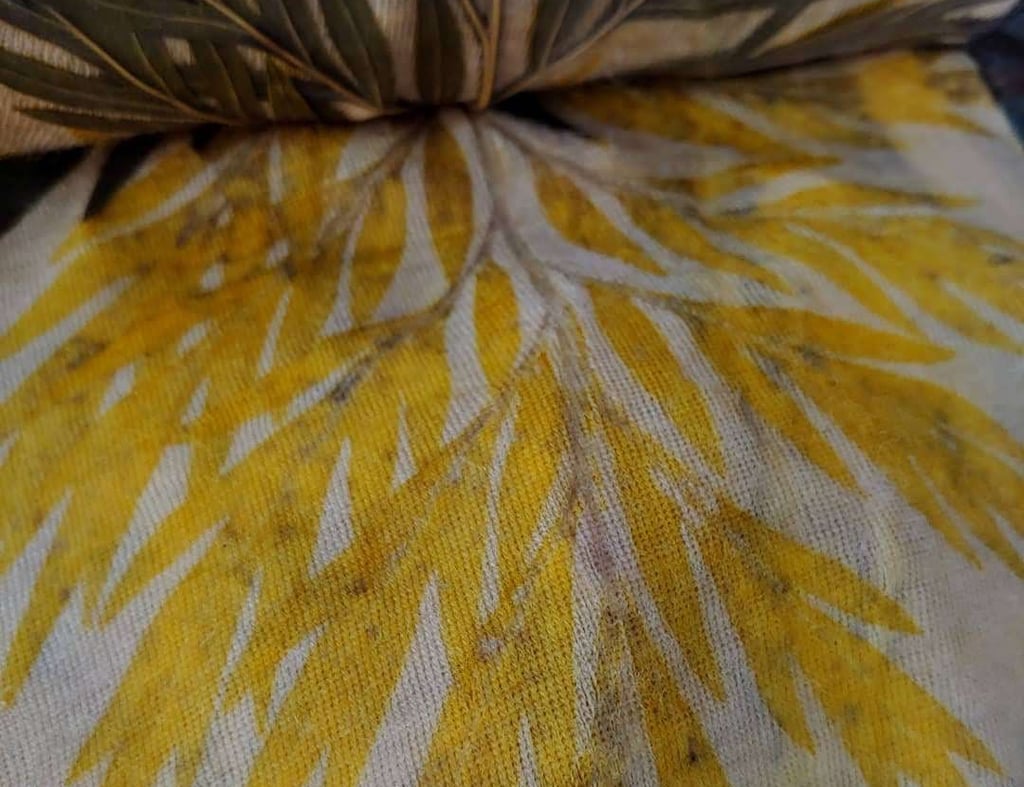
Another powerful example is eucalyptus. Widely used in natural dyeing, eucalyptus is also known for its therapeutic properties. It contains compounds with antimicrobial, anti-inflammatory, antibacterial, and antiseptic effects. Traditionally used in medicine and essential oils, eucalyptus brings an added layer of function and care when used in textiles.
When we begin to see clothing not just as fashion, but as a relationship between our bodies and the natural world, everything changes.
What we wear can nourish us. It can protect us. It can even help us heal.
Choosing natural fibers dyed with plant-based materials is more than a sustainable choice—it is an invitation to reconnect with something deeper. Something ancient. Something inherently aligned with the human body.
Your clothing can be more than something you put on.
When we choose what to wear, we are shaping the environment our body lives in.
Clothing can either contribute to stress—or support balance and healing over time.
Natural fibers and plant-based dyes offer a path back to materials that work in harmony with the body, not against it.
There is so much more to uncover—about the properties of different fibers, the medicinal qualities of plants, and how these elements come together in truly supportive clothing.
If this resonates with you, I invite you to come back and continue learning. This is an ongoing journey—one that begins with awareness and deepens with each choice we make.